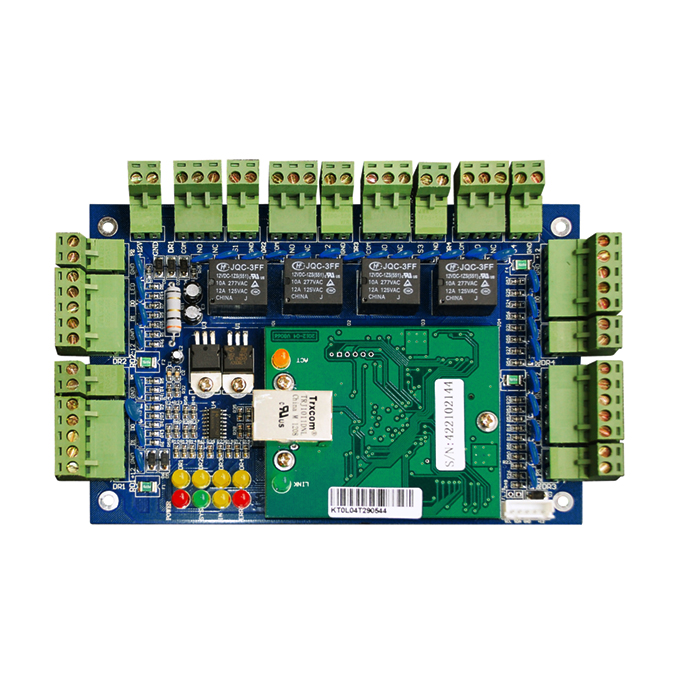
| Unit Size |
16.0 x 16.0 (cm) |
| Unit Packing Way |
Brown box |
| Unit Packing Size |
27.3L x 22.8W x 6.5H (cm) |
| Accessories |
User manual, software |
| Function Introduction |
|
| Conventional Function |
offline operation; real time supervision; photo display; mass storage; flexible user privilege setup; remote unlocking; multi-user supervision; quick setting; convenient checking and query; revisable and printable report form; report form; report can be exported to excel file; card+password unlocking; alarm for long time unclosing; alarm for invalid card swiping; first card unlocking; alarm for illegal break in; unlocking at definite time; e-map, patrol, meeting, const meal etc. |
| Professional function |
for professional users such as bank, cash house, telecom station, power supply station, prison and police station: interface locking; intimidation alarm; integrated fire control; anti-passback and anti-tail; interlocking; multi-card unlocking; emergency double locking; in door population checking; unlocking based on internal and external validation. |
| all-in-one-card management system |
normal shift and multi-shifts time attendance management system; fixed ration dining management system; meeting attendance management system; online patrol management system and security alarm management system. |
| Parameter |
|
| Communication |
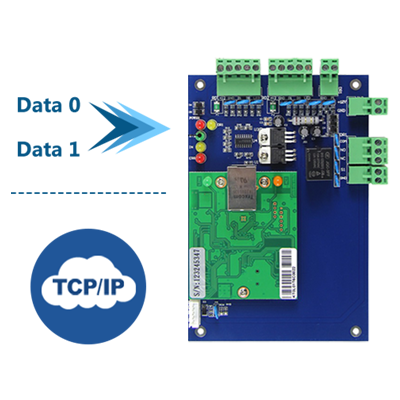
TCP/IP |
| English Software supportable database: |
SQL |
| Description |
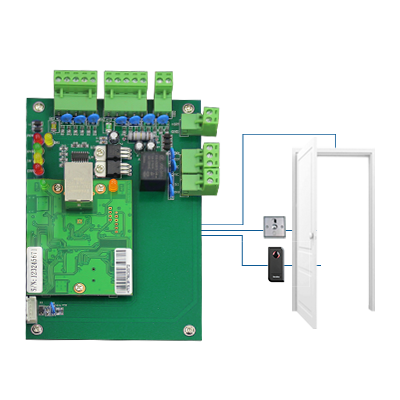
Control 4 doors, get in by swiping card and get out door by button |
| Power Supply |
12VDC; 4 ~ 7A |
| Power Consumption of Circuit Board |
< 100mA |
| Input Format of Reader |
Wiegand 26bits ~40 bits (All card reader with compatible protocol, such as Motorola , HID, EM , Mifare one etc) |
| Quantity of Readers |
2 pcs |
| Door Controlled |
1 |
| Door opening time extending setting |
1 ~ 600 Seconds(adjustable) |
| Max quantity of controller |
Unlimited |
| Operation Temperature |
-40 oC ~ 70 oC (-40 oF ~ 158 oF) |
| Operation Humidity |
10% ~90 % RH, No Condensation |
| Quantity of users |
20,000 Users |
| Quantity of Event Buffers(offline) |
100,000 event buffers |
| Power interruption protection measure |
High speed memory, records never lose |
| Max Distance from Reader to Controller |
100M (suggestion distance 80M) |
| Max Distance between Controllers |
|
|
Depend on network range |
| Collocations |
PCB board, case, power, power line, serial port communication line, software, manual, certificate, key(2pcs), carton |
| Alarm for long time door open, illegal break in, intimidate |
Yes |
| Fire and alarm linkage |
If no connection with the expansion board, only has software interface alarm, and drive the computer speaker. If connected with expansion board, is able to alarm by hardware, if connected with strengthened expansion board, then is able to Security alarm |
| Compulsive open and close door at long time |
Yes |
| Open door in remote distance |
Yes |
| Inter block |
Yes |
| Anti pass back and tail |
Yes |
| Multi-card open door |
Yes |
| Open long time at specified time |
Yes |
| Electronic map |
Yes |
| Urgency locking |
Yes |
| First card unlocking |
Yes |
| Unlock based on internal and external validation |
Yes |
| Keypad (card+passwor, supper password) |
Yes |