

2026-09-16
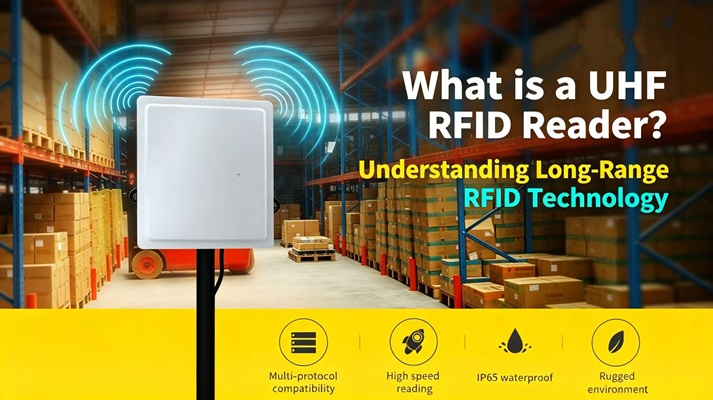
What is a UHF RFID Reader? Understanding Long-Range RFID Technology
1. Technical definition of Ultra-High Frequency
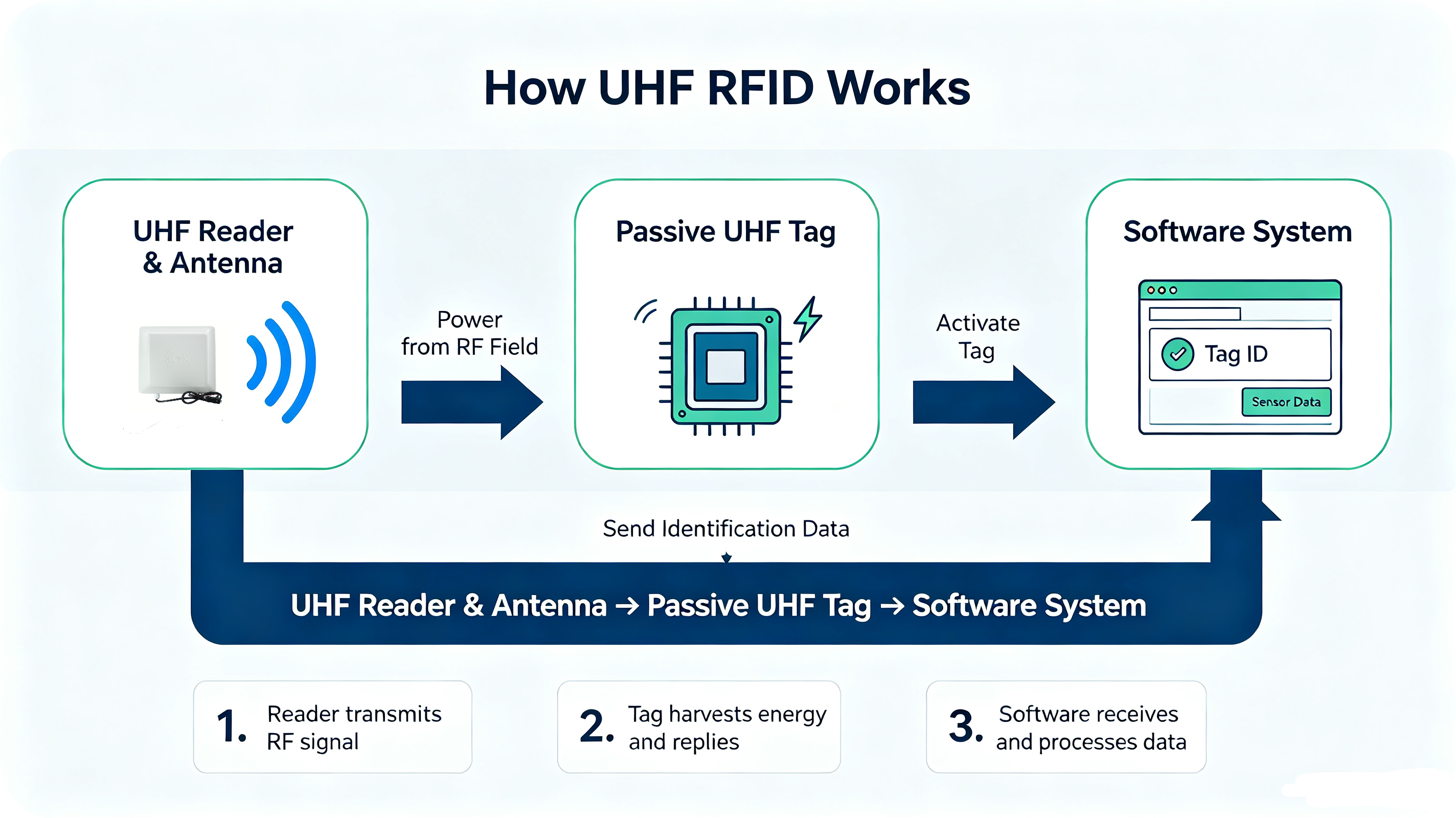
UHF (Ultra-High Frequency) RFID refers to passive RFID technology operating in the global industrial band of 860–960 MHz, complying with EPC Gen2 and ISO 18000-6C mainstream protocols. Unlike LF/HF’s near-field inductive coupling, UHF adopts far-field backscatter coupling, enabling long-distance wireless identification without tag batteries.
UHF (Ultra-High Frequency) RFID refers to passive RFID technology operating in the global industrial band of 860–960 MHz, complying with EPC Gen2 and ISO 18000-6C mainstream protocols. Unlike LF/HF’s near-field inductive coupling, UHF adopts far-field backscatter coupling, enabling long-distance wireless identification without tag batteries.
2. Comparison with LF and HF RFID
Frequency band directly determines RFID read range, speed, anti-interference performance, and cost. The core differences are summarized below:
Frequency band directly determines RFID read range, speed, anti-interference performance, and cost. The core differences are summarized below:
| Parameter | LF RFID (125–134 kHz) | HF RFID (13.56 MHz) |
| Read Range | ≤ 10 cm (ultra-short) | 5–30 cm (short) |
| Multi-Tag Reading | Not supported | Limited & slow |
| Data Speed | Slow | Medium |
| Tag Unit Cost | High | Medium |
| Typical Use Cases | Access control, animal tracking | NFC payment, card swiping |
3. Key benefits for bulk identification
UHF RFID solves the biggest pain points of traditional barcode and short-range RFID for bulk management:
UHF RFID solves the biggest pain points of traditional barcode and short-range RFID for bulk management:
▶ Mass high-speed recognition: Supports reading hundreds of tags per second with anti-collision technology, enabling one-pass full pallet or full-box inventory without one-by-one scanning.
▶ Hands-free long-range scanning: 1–10 meters reading range supports automatic identification for conveyor lines, warehouse aisles, and inbound/outbound logistics, reducing manual labor.
▶ Low total mass deployment cost: Passive UHF tags require no power supply, with ultra-low unit price and 10+ years service life, suitable for full-coverage tagging of large inventory batches.
▶Stable & scalable integration: Compatible with mainstream industrial management systems, supporting customized secondary development and phased system expansion.
▶ Hands-free long-range scanning: 1–10 meters reading range supports automatic identification for conveyor lines, warehouse aisles, and inbound/outbound logistics, reducing manual labor.
▶ Low total mass deployment cost: Passive UHF tags require no power supply, with ultra-low unit price and 10+ years service life, suitable for full-coverage tagging of large inventory batches.
▶Stable & scalable integration: Compatible with mainstream industrial management systems, supporting customized secondary development and phased system expansion.
4. Implementation Costs & Considerations
4.1 Cost Structure
UHF RFID project costs cover three core parts with excellent long-term ROI:
• Hardware cost: UHF readers and antennas (one-time procurement, long service life).
• Tag cost: Low-cost universal labels for general goods, slightly higher-priced waterproof/metal-resistant tags for special industrial environments.
• Deployment & integration cost: System docking, on-site debugging, and technical training with no recurring fees.
4.1 Cost Structure
UHF RFID project costs cover three core parts with excellent long-term ROI:
• Hardware cost: UHF readers and antennas (one-time procurement, long service life).
• Tag cost: Low-cost universal labels for general goods, slightly higher-priced waterproof/metal-resistant tags for special industrial environments.
• Deployment & integration cost: System docking, on-site debugging, and technical training with no recurring fees.
4.2 Key Consideration Notes
• Environment adaptation: UHF signals are slightly affected by metal and liquid; deploy anti-metal tags and directional antennas for metal shelf or wet warehouse scenarios.
• Regional frequency compliance: Choose multi-band readers to match local regional UHF frequency standards for cross-border business.
• Parameter debugging: Adjust reading power and sensitivity to avoid cross-scanning and ensure identification accuracy in dense inventory environments.
• Environment adaptation: UHF signals are slightly affected by metal and liquid; deploy anti-metal tags and directional antennas for metal shelf or wet warehouse scenarios.
• Regional frequency compliance: Choose multi-band readers to match local regional UHF frequency standards for cross-border business.
• Parameter debugging: Adjust reading power and sensitivity to avoid cross-scanning and ensure identification accuracy in dense inventory environments.
Conclusion
UHF RFID readers are the most cost-effective long-range RFID solution for bulk inventory, supply chain tracking, and large-scale asset management. It fills the efficiency and distance gaps of LF/HF RFID, helping enterprises realize fast, automatic, and digital batch identification management with lower long-term operating costs.
UHF RFID readers are the most cost-effective long-range RFID solution for bulk inventory, supply chain tracking, and large-scale asset management. It fills the efficiency and distance gaps of LF/HF RFID, helping enterprises realize fast, automatic, and digital batch identification management with lower long-term operating costs.