

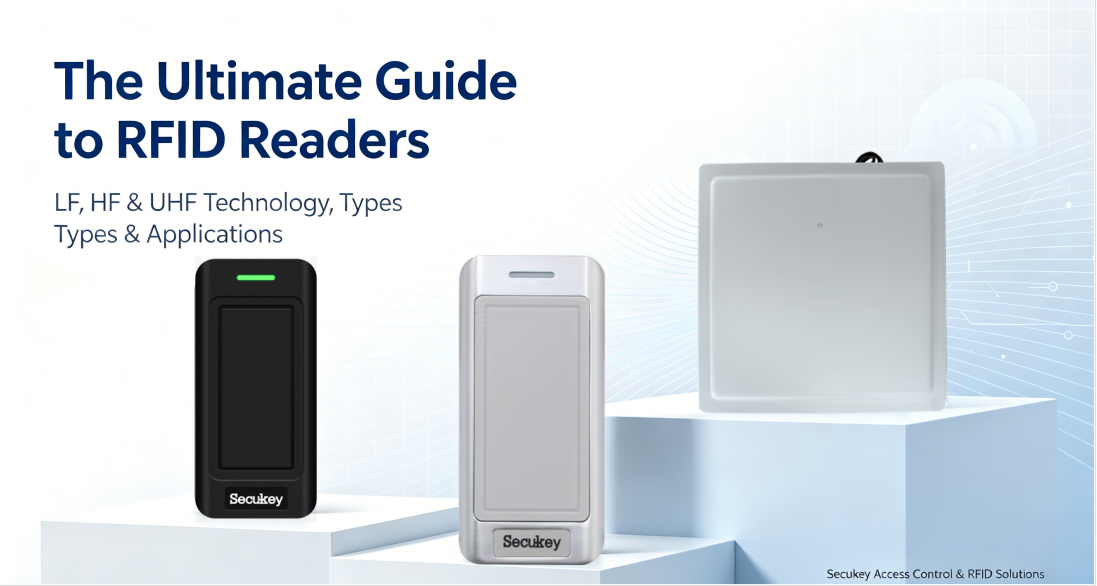
The Ultimate Guide to RFID Readers: Technology, Types, and Applications
Introduction
What is an RFID reader? If you have ever wondered what an RFID reader does or what RFID readers are, you are not alone. RFID readers are core hardware devices in radio‑frequency identification systems, widely deployed for access control, inventory tracking, asset management and many other use cases. Many users also search for “what is an RFID card reader”, which generally refers to the same category of contactless reading equipment.
In simple terms, an RFID reader transmits radio signals and communicates wirelessly with RFID tags or cards to retrieve stored data without physical contact. This article explains how RFID readers work, breaks down the three mainstream RFID frequency types, introduces common real‑world applications, and shares practical guidance on selecting a suitable reader for your project — including UHF RFID reader technology.
1. How RFID Readers Work: A Technical Guide
While implementations vary, every basic RFID system is built from four core building blocks:
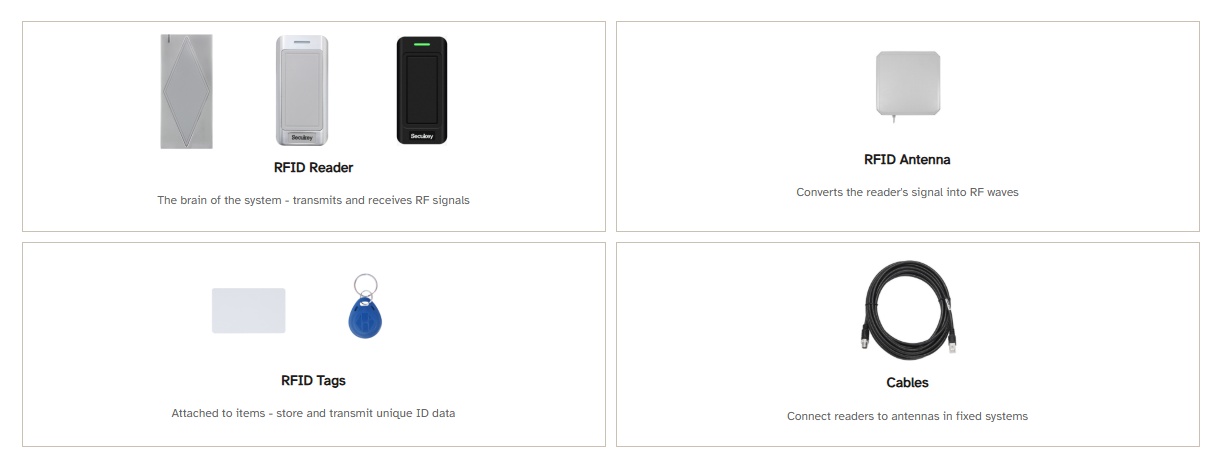
- RFID Reader — The brain of the system‑transmits and receives RF signals
- RFID Antenna — Converts the reader’s electrical signals into radio waves
- RFID Tags — Attached to physical items; store and broadcast unique ID data
- Cables — Connect readers to external antennas in fixed deployments
A frequent search question is: how does an RFID reader work? Fundamentally, an RFID reader integrates an RF module, an antenna, a control unit and a data output interface.
Once powered on, the reader emits modulated radio waves via its antenna. Nearby passive RFID tags harvest energy from these RF signals, “wake up”, and send their unique identification data back to the reader. The reader captures the returning signal, demodulates and decodes it, then relays the ID information to a host system, such as an access controller, PC or inventory terminal.
Popular queries like “how do RFID readers work” all describe this wireless handshake process. Unlike barcode scanners, RFID requires no line‑of‑sight, and multiple tags can be identified simultaneously within the reading zone. This is RFID’s key competitive advantage.
So what does an RFID reader do? Its core functions are to activate tags, capture their IDs, validate data, and forward information to upstream software. That sums up the basic RFID readers meaning: it acts as a bridge between physical assets and digital databases.
2. Types of RFID: LF, HF, and UHF
RFID readers are grouped by operating frequency. Each band delivers distinct performance and suits different scenarios.
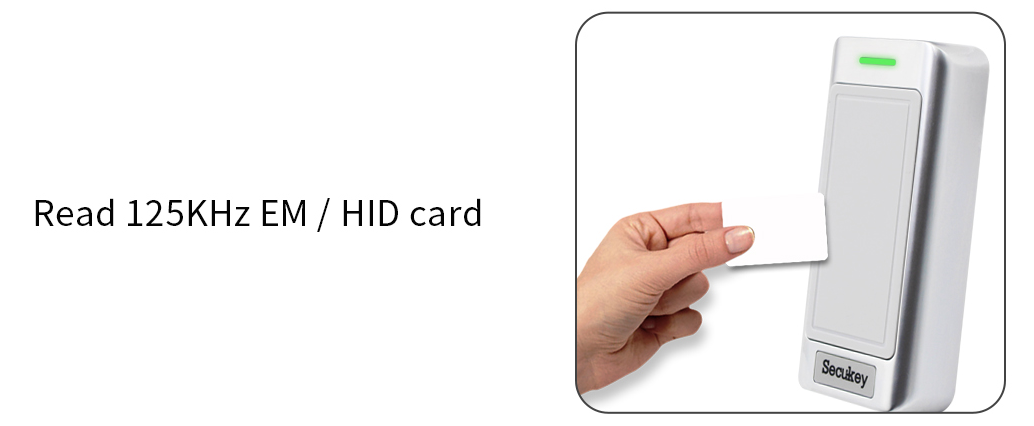
LF (Low Frequency, 125 kHz) LF readers offer short read ranges, typically only a few centimetres. They are relatively immune to interference from metal and water. Typical applications include animal tagging, simple key fobs and basic access control tokens.
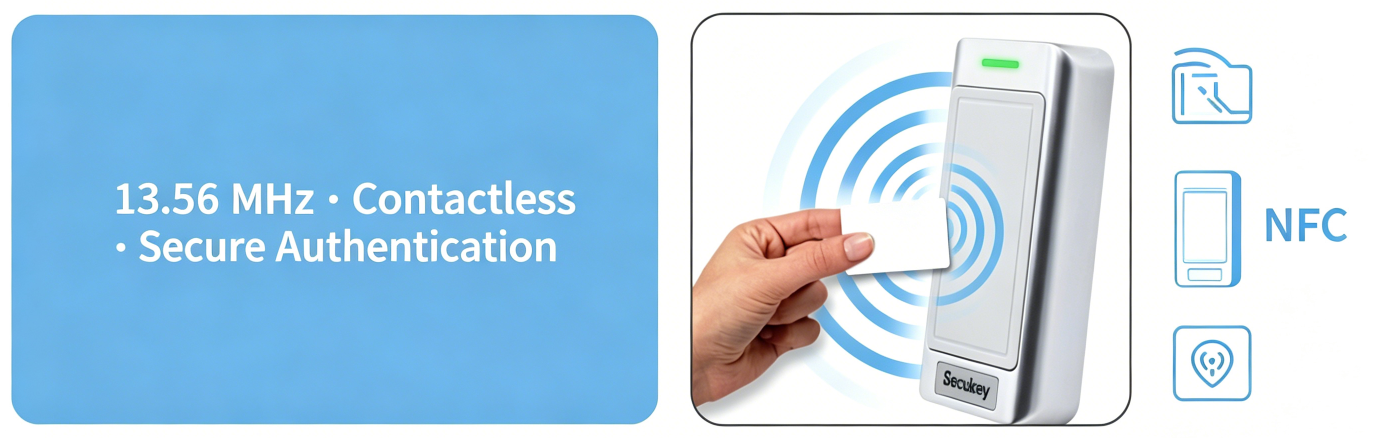
HF (High Frequency, 13.56 MHz) This is what most people refer to when searching “what is an RFID card reader”. HF covers MIFARE and DESFire credentials widely adopted for office access control, transit cards and campus ID cards. Usual read distance ranges from 1 cm to 10 cm, with robust data encryption support. It remains the dominant option for secure door access systems.
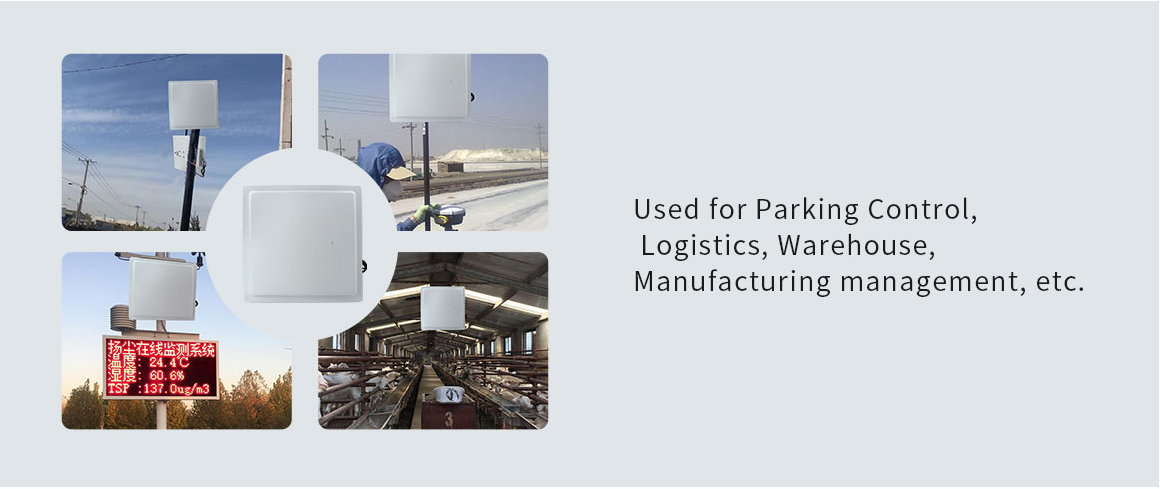
UHF (Ultra‑High Frequency, approx. 860–960 MHz) This answers what is a UHF RFID reader. UHF RFID reader technology delivers much longer read distances — from 1 metre up to over 10 metres for high‑power models. It supports fast bulk multi‑tag reading, making UHF the preferred choice for warehouse inventory, supply‑chain logistics, pallet tracking and vehicle identification. The main limitation: UHF signals are easily attenuated by liquids and dense metal.
No single frequency works for every deployment. LF, HF and UHF each have their own sweet spots based on required read distance, reading speed, environmental conditions and security requirements.
3. Applications: From Security to Inventory
What is an RFID reader used for? Use cases span nearly every industry.
Access Control & Security HF RFID readers are standard hardware for commercial and residential door access. Employees or visitors present RFID keycards or fobs; the reader validates the ID and triggers door unlocking. This is the most widely recognised deployment for system integrators and property managers.
Inventory & Supply Chain Management This is where UHF RFID truly excels. Warehouses deploy banks of UHF RFID readers to scan hundreds of tagged goods as pallets pass through dock doors. It replaces slow manual barcode scanning, greatly cutting labour costs and counting errors.
Asset Tracking Companies attach RFID tags to IT hardware, tools, containers and high‑value assets. Fixed or handheld RFID readers automatically locate items and log movement history.
Other common applications Event ticketing, library management, textile/laundry tracking, vehicle parking identification and livestock tracking.