

2026-09-30
Smart System Access: Integrated Solutions for Modern Building Management
1. Defining Smart Access Solutions
What is smart access? In simple terms, smart access is a connected approach to managing who can enter a building, which areas they can access, and when they are permitted to enter.
Traditional access control often focuses on individual doors or access points. A smart access solution takes a broader approach by connecting access devices with management software and digital credentials.
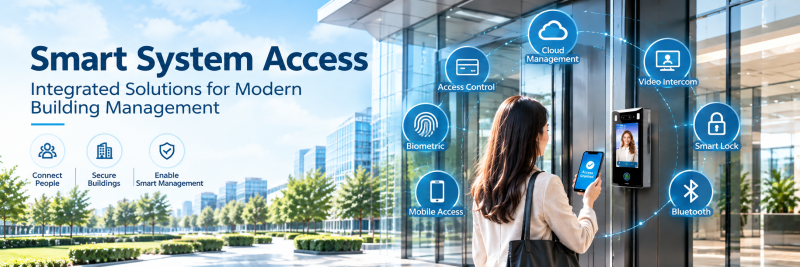
Depending on the application, a smart access system may support RFID cards, PIN codes, fingerprints, facial recognition, Bluetooth, mobile credentials, smart locks, or video intercoms.
The key difference is not simply the authentication method. It is how these technologies are managed and connected.
What Is Smart Access Control?
So, what is smart access control?
Smart access control uses connected hardware and software to manage access permissions digitally. Instead of giving every user unrestricted access through a physical key, administrators can assign permissions based on factors such as the user, location, schedule, or role.
For example, employees in an office may have access to the main entrance during working hours, while managers may also be permitted to enter restricted areas. A contractor could receive temporary access for a specific period and have that permission removed when the work is completed.
Smart access can also bring different technologies together. A single building may use RFID readers at employee entrances, smart locks for private offices, video intercoms at the main entrance, and mobile credentials for selected users.
This creates a more connected access environment rather than a collection of independent devices.

2. The Benefits of Centralized Building Management
As the number of doors, users, and access devices increases, managing each access point individually can become difficult. Centralized building management provides a way to manage these different access points through a common platform.
Simplified User and Permission Management
One of the main benefits is easier user management.
When a new employee joins a company, an administrator can create an account and assign the appropriate access rights. If that employee changes roles, their permissions can be updated. When they leave the organization, their access can be revoked without replacing physical keys or changing every door individually.
The same approach can be useful in residential buildings, hotels, offices, and commercial properties, where different groups of users may require different levels of access.
Greater Visibility Across the Building
Centralized management can also provide a clearer overview of access activity.
Depending on the system, administrators may be able to review records showing when a credential was used, which access point was involved, and whether the access attempt was successful.
This gives facility managers a more consistent view of building activity and can make it easier to investigate unusual access events.
Easier Management of Multiple Doors and Locations
Centralization becomes even more useful as a property or organization grows.