{当前产品的产品关键词轮巡使用}
2026-07-17

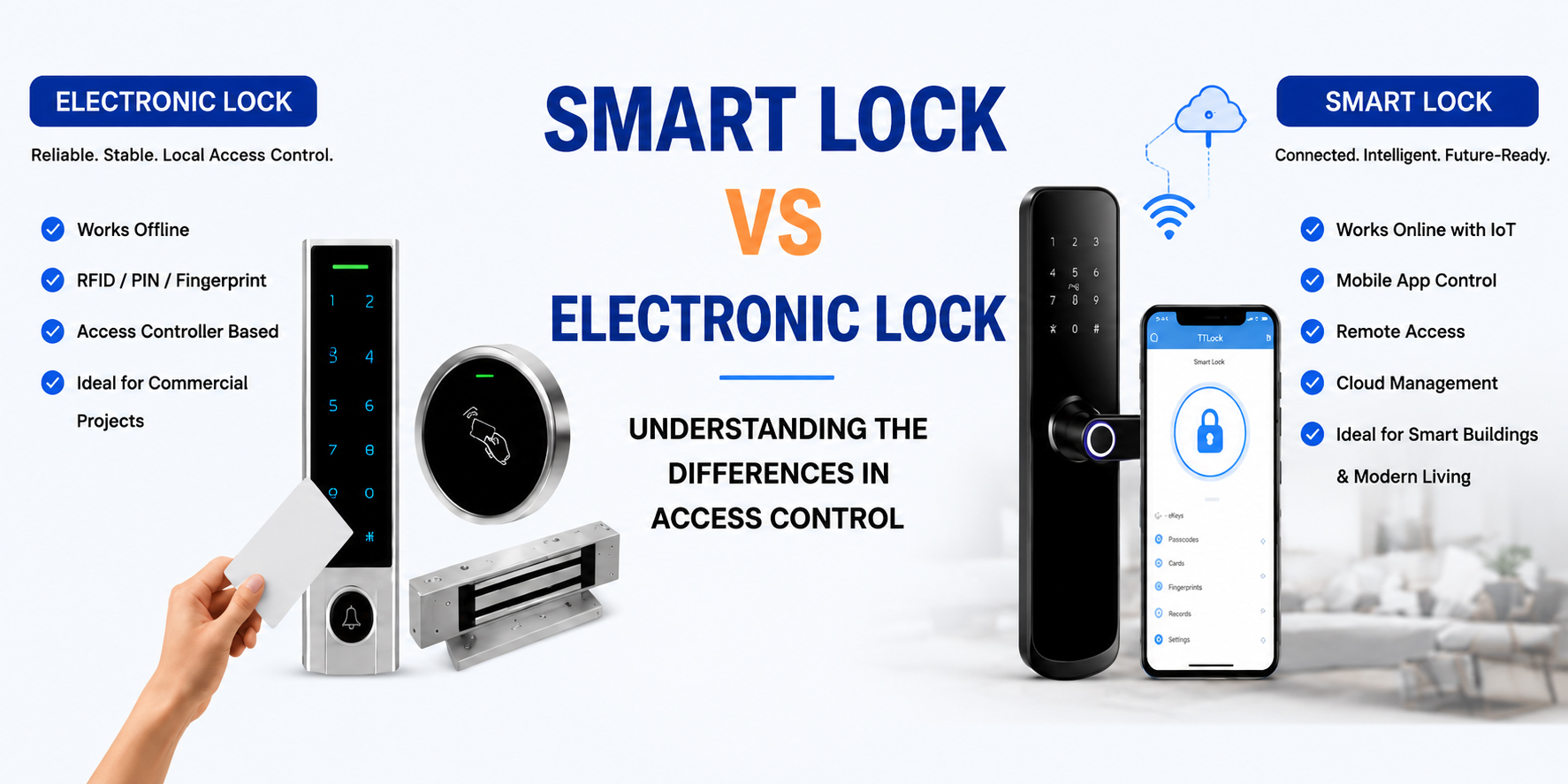
Smart Lock vs. Electronic Lock: Understanding the Differences in Access Control Systems

Smart Lock vs. Electronic Lock: Which Access Control Solution Is Right for Your Project?

With the rapid development of smart buildings and digital security systems, traditional keys are gradually being replaced by electronic and intelligent access solutions.
However, many project owners, installers, and system integrators still have questions:
  • Are smart locks and electronic locks the same thing?
  • Which one is better for commercial buildings, apartments, or smart homes?
Although both solutions use electronic technology to control door access, they are designed for different requirements.
An electronic lock focuses on:Reliable access control and secure authentication.
A smart lock focuses on: Connectivity, remote management, and intelligent integration.
Understanding these differences helps you choose the right access control system for your project.

1. What Is an Electronic Lock?

Electronic Lock: Secure Access Control Without Internet Dependency

An electronic lock is a security device that uses electronic signals instead of traditional mechanical keys to control access.

Unlike smart locks, most electronic locks operate locally without requiring cloud platforms or internet connections.

Common authentication methods include:

  • RFID card access
  • PIN code entry
  • Fingerprint recognition
  • Keypad verification
  • Access controller signals

A typical electronic access control system includes:

User Credential - Access Controller - Relay Output - Electrionic Lock - Door Opens

Advantages of Electronic Locks

1. Stable and Reliable Operation

Because electronic locks do not depend on internet connectivity, they provide consistent performance in commercial environments.

Suitable applications include:

  • Office buildings
  • Schools
  • Factories
  • Hospitals
  • Industrial facilities

2. Flexible Authentication Options

Modern electronic locks support multiple identification methods:
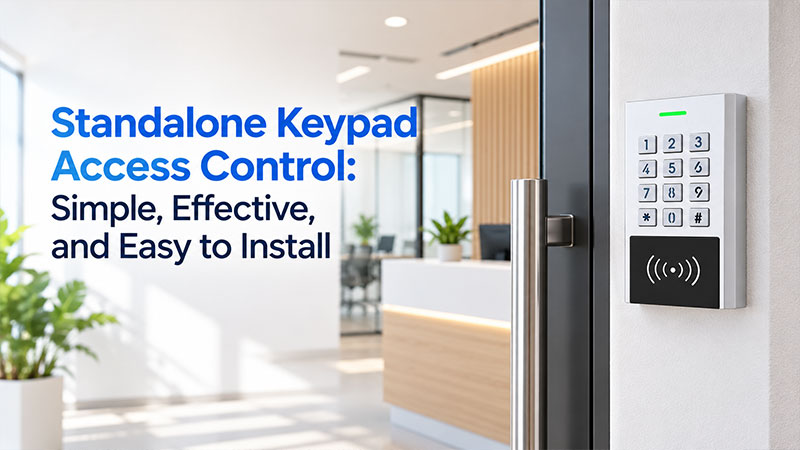
  • RFID cards
  • Passwords
  • Fingerprints
  • Biometric verification

3. Cost-Effective Security Solution

For projects that require controlled access without remote management, electronic locks provide excellent security and affordability.

Smart Lock vs. Electronic Lock: Understanding the Differences in Access Control


2. What Is a Smart Lock?

Smart Lock: Electronic Security with IoT Connectivity

A smart lock is an advanced electronic lock integrated with wireless communication technologies.

Typical communication methods include:

  • Bluetooth
  • WiFi
  • Mobile APP
  • Cloud platform
  • Smart home ecosystem

Unlike traditional electronic locks, smart locks allow users to manage access remotely.

A smart lock system usually works like this: Mobile App - Cloud Platform - Smart Lock - Door Access

Key Features of Smart Locks

Remote Access Management,Users can:

  • Unlock doors remotely
  • Create temporary passwords
  • Manage multiple users
  • Check access records

Smart Home Integration,Smart locks can connect with:

  • Home automation systems
  • Mobile applications
  • IoT platforms

Real-Time Monitoring,Administrators can receive:

  • Access notifications
  • User activity records
  • Security alerts
Connectivity, Features, and Integration Capabilities.

Smart Lock vs Electronic Lock: Key Differences

Feature

Electronic Lock

Smart Lock

Internet Required

No

Optional / Yes

Remote Management

Limited

Available

Mobile APP Control

Usually No

Yes

Cloud Platform

No

Yes

RFID Access

Yes

Yes

Fingerprint Access

Yes

Yes

Installation Cost

Lower

Higher

Best For

Commercial Access Control

Smart Buildings & IoT Applications


3. Connectivity, Features, and Integration Capabilities

Connectivity Difference

The biggest difference between electronic locks and smart locks is network connectivity.

Traditional Electronic Lock System,Designed for local access management:

RFID Card - Access Controller - Electric Lock - Door Opens
Advantages:

✔ Stable
✔ Fast response
✔ No internet dependency


Smart Lock System,Designed for intelligent management:

Smartphone App - Cloud Platform - Smart Lock - Door Access
Advantages:

✔ Remote control
✔ User management
✔ Data synchronization


4. Which Access Control Solution Does Your Project Need?

Choosing between a smart lock and an electronic lock depends on your project requirements.

Choose Electronic Locks When You Need:

✔ High reliability
✔ Large user management
✔ Stable operation
✔ Centralized access control

Recommended projects:

  • Commercial offices
  • Manufacturing plants
  • Educational facilities
  • Government buildings

Choose Smart Locks When You Need:

✔ Remote access
✔ Mobile management
✔ Temporary permissions
✔ Smart home integration

Recommended projects:

  • Apartments
  • Rental properties
  • Smart homes
  • Small offices

5. Secukey Hybrid Access Solutions: Combining Security and Intelligence

Modern access control projects increasingly require both security and flexibility.

Instead of choosing only traditional electronic locks or smart locks, hybrid solutions combine both advantages.

Secukey's Hybrid Solutions.

Secukey provides integrated access control solutions including:

  • Smart locks
  • RFID access controllers
  • Fingerprint access systems
  • Keypad access devices
  • Wireless access solutions
  • Electric locks

Example Hybrid Applications

Smart Apartment Solution: Smart Lock + Mobile APP + Fingerprint Access
Benefits:
  • Remote tenant management
  • Convenient access
  • Improved property efficiency

Commercial Office Solution:

RFID Reader + Controller + Electric Lock

Benefits:
  • Employee access management
  • Security monitoring
  • Easy administration

Mixed-Use Building Solution:

Smart Lock + Access Control System + Cloud Management

Benefits:
  • Flexible authorization
  • Multiple access methods
  • Scalable security architecture
Defining Electronic Locks (Offline) vs. Smart Locks (IoT). Application

How to Choose the Right Access Solution?

Use this simple decision process:

Need remote access? - Yes! - Choose Smart Lock

No,Need large-scale access management? - Yes! - Electronic Access Control

Need Both? - Secukey Hybrid Solution

Which One Does Your Project Need?

Conclusion: Smart Lock or Electronic Lock?

Smart locks and electronic locks are not competitors — they serve different access control needs.

Electronic locks provide: Security + Stability + Reliable Local Control

Smart locks provide: Connectivity + Intelligence + Remote Management

For modern security projects, the best solution depends on application requirements, management needs, and future scalability.

With a complete range of smart access and electronic access control products, Secukey helps global partners create secure, flexible, and future-ready door access solutions.