

2026-08-25
Electric Strike vs. Mortise Lock: Finding the Right Balance of Security and Convenience
Choosing between an electric strike and a mortise lock can make or break your access control project. Here's what every B2B buyer and system integrator needs to know.
1. Introduction – The Two Paths to Door Security
Every access-controlled door begins with a fundamental question: Do you modify the door or the frame?
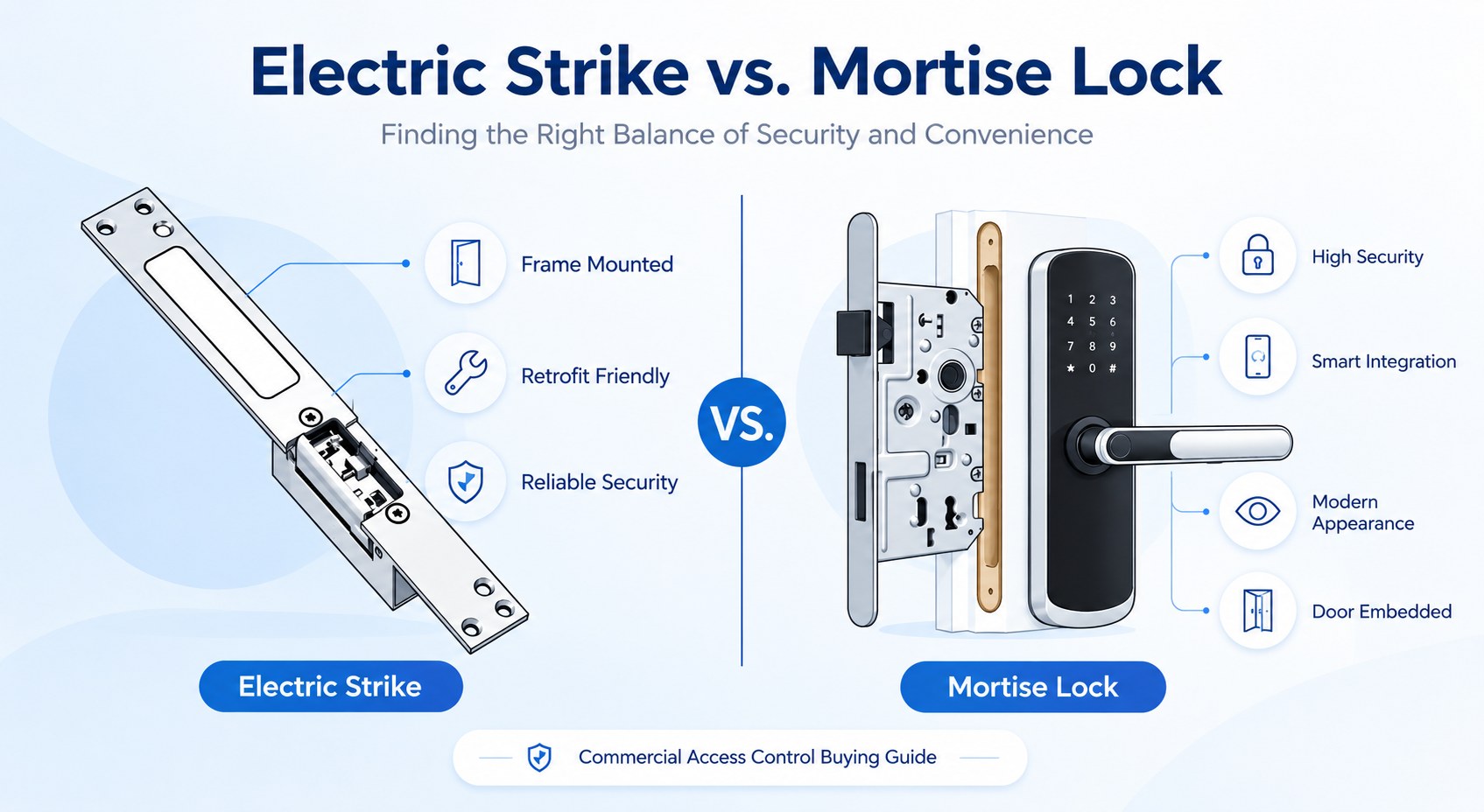
This question separates two of the most common approaches in commercial access control: the electric strike and the mortise lock. While both secure doors and integrate with electronic access control systems, they operate on entirely different principles.
An electric strike is installed in the door frame. It replaces the traditional fixed strike plate with an electromechanical device that releases the latch upon command. When activated, the strike's surface pivots out of the way, allowing the door to be pushed open without operating the handle or lever.
A mortise lock, by contrast, is installed inside the door itself. It requires a pocket—the mortise—to be cut into the door edge, into which the lock body is fitted. The lock body contains the latchbolt, deadbolt, and locking mechanism, all integrated into a single, robust unit.
Why this choice matters for B2B buyers: The decision between an electric strike and a mortise lock affects installation cost, system flexibility, security level, maintenance requirements, and long term reliability. For distributors, OEM buyers, and system integrators, understanding this distinction is essential for recommending the right solution to end customers.
2. Electric Strikes – Flexibility Without Sacrificing the Lock
An electric strike is fundamentally a frame mounted device that adds electronic control to an existing mechanical lockset. It does not replace the lock itself—it replaces only the strike plate.
How It Works
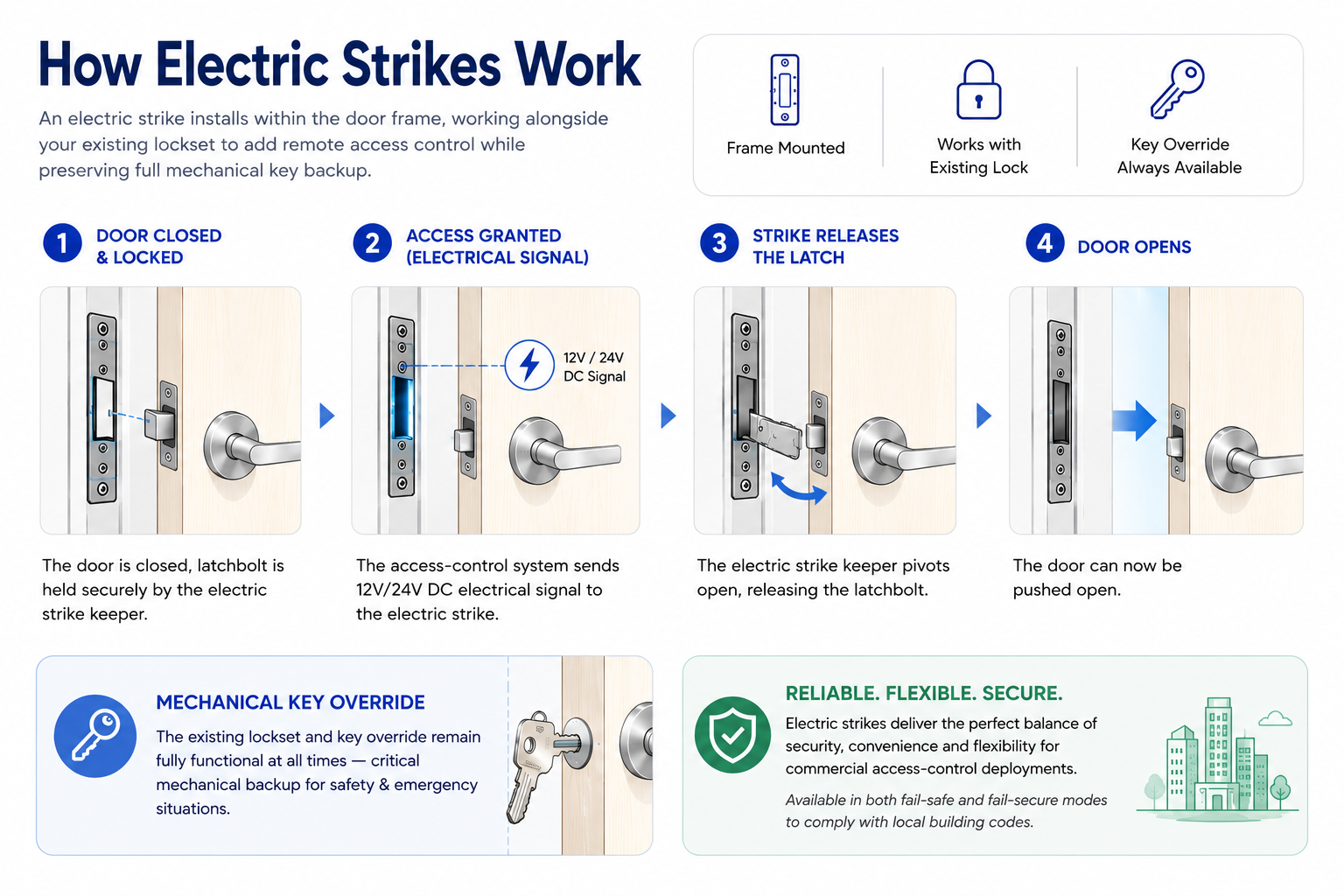
The electric strike is installed in the door frame, aligned with the latchbolt of the existing mechanical lock. When the access control system sends an electrical signal (typically 12V or 24V DC), the strike releases the latch, allowing the door to open. The mechanical lock remains fully functional with its key, providing a critical backup.
Key Advantages
-
Preserves existing hardware: Electric strikes work with existing cylindrical or mortise locksets, eliminating the need to replace the entire lock.
-
Remote access control: Integrates seamlessly with keypads, card readers, biometric devices, and intercom systems.
-
Retrofit friendly: Electric strikes are the simplest retrofit solution to add electronic access control to existing doors fitted with mortise locks. You don't even need to disassemble the lockset—all the work is in the frame.
-
Fail safe/fail secure options: Available in both configurations to meet different security and life safety requirements.
-
Flexible applications: Suitable for timber and metal doors, interior and perimeter access points.
Considerations
-
Electronic components require maintenance: Regular inspection of wiring, power supply, and moving parts is essential.
-
Frame modification may be needed: While less invasive than replacing a lockset, installation may require minor modifications to the door frame.
-
Aesthetic considerations: Some integrators note that electric strikes can be less visually appealing than fully integrated locksets.