

2026-09-12
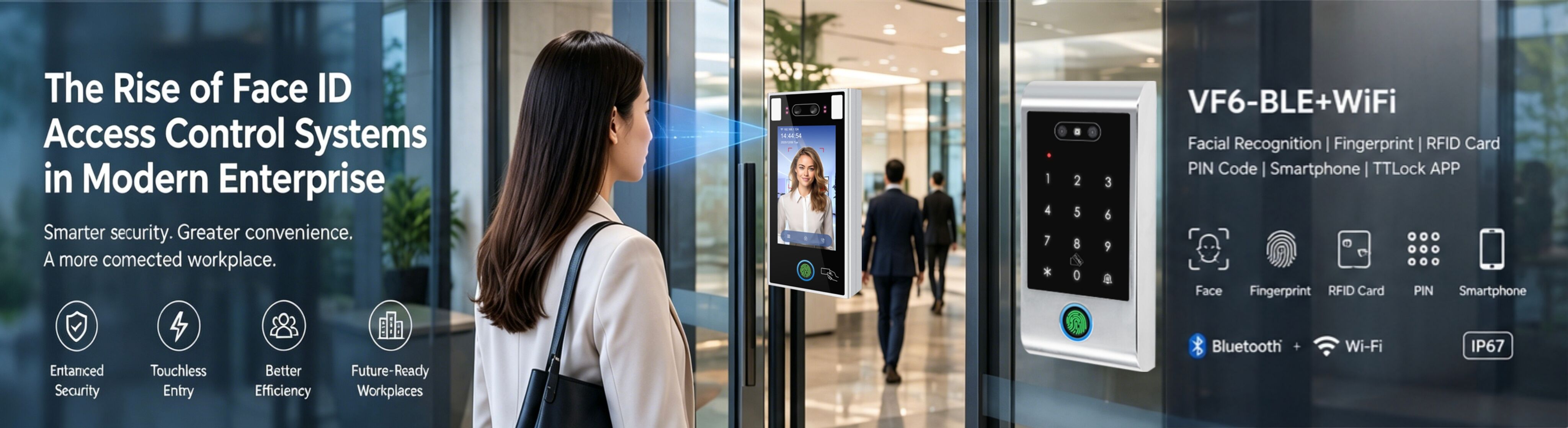
The Rise of Face ID Access Control in Modern Enterprise
As businesses continue to adopt smarter and more connected security technologies, traditional access methods such as keys, cards, and PIN codes are gradually being complemented by biometric solutions. Among them, face ID access control is becoming an increasingly attractive option for modern workplaces, commercial buildings, residential communities, and other high-traffic environments.
The shift is driven by more than convenience. Organizations are looking for access solutions that combine security, speed, hygiene, and flexible management in a single system. Facial recognition technology can help meet these requirements while supporting the broader trend toward contactless and intelligent access control.
What Is Face ID Access Control?
Face ID access control uses facial recognition technology to verify a person's identity before granting access to a secured area. Instead of presenting a physical card or entering a password, an authorized user can simply approach the access point for biometric verification.
A modern face ID access control system may also integrate multiple authentication methods. Depending on the application, users can access a door through facial recognition, fingerprint, RFID card, PIN, or a smartphone.

For businesses, this combination can provide a more flexible approach to access management while reducing dependence on traditional physical credentials. Secukey's VF6-BLE+WiFi, for example, supports facial recognition, fingerprint, RFID card, PIN, and smartphone unlocking, with Bluetooth and Bluetooth + Wi-Fi versions available.
1. Technology Behind Facial Recognition Access Control
The effectiveness of biometric access depends on the ability to recognize authorized users quickly and reliably. Modern facial recognition devices use cameras and recognition algorithms to compare a person's facial features with registered user information.
For enterprise applications, the technology should be considered together with other factors, including:
-
Recognition performance in different lighting conditions
-
User capacity
-
Access verification speed
-
Data and permission management
-
Integration with electronic locks and access controllers
-
Communication options such as Bluetooth or Wi-Fi
-
Environmental protection for indoor or outdoor installations

For example, Secukey's VF6-BLE+WiFi combines facial recognition with fingerprint, PIN, RFID card, and smartphone access. The system can also be managed through the TTLock APP, allowing administrators to add or delete users and issue temporary access credentials.
This type of multi-method authentication can be particularly useful for businesses that want biometric security while maintaining alternative access options for different users.
2. Contactless Entry and Better Hygiene
One of the most important advantages of facial authentication is its contactless nature.