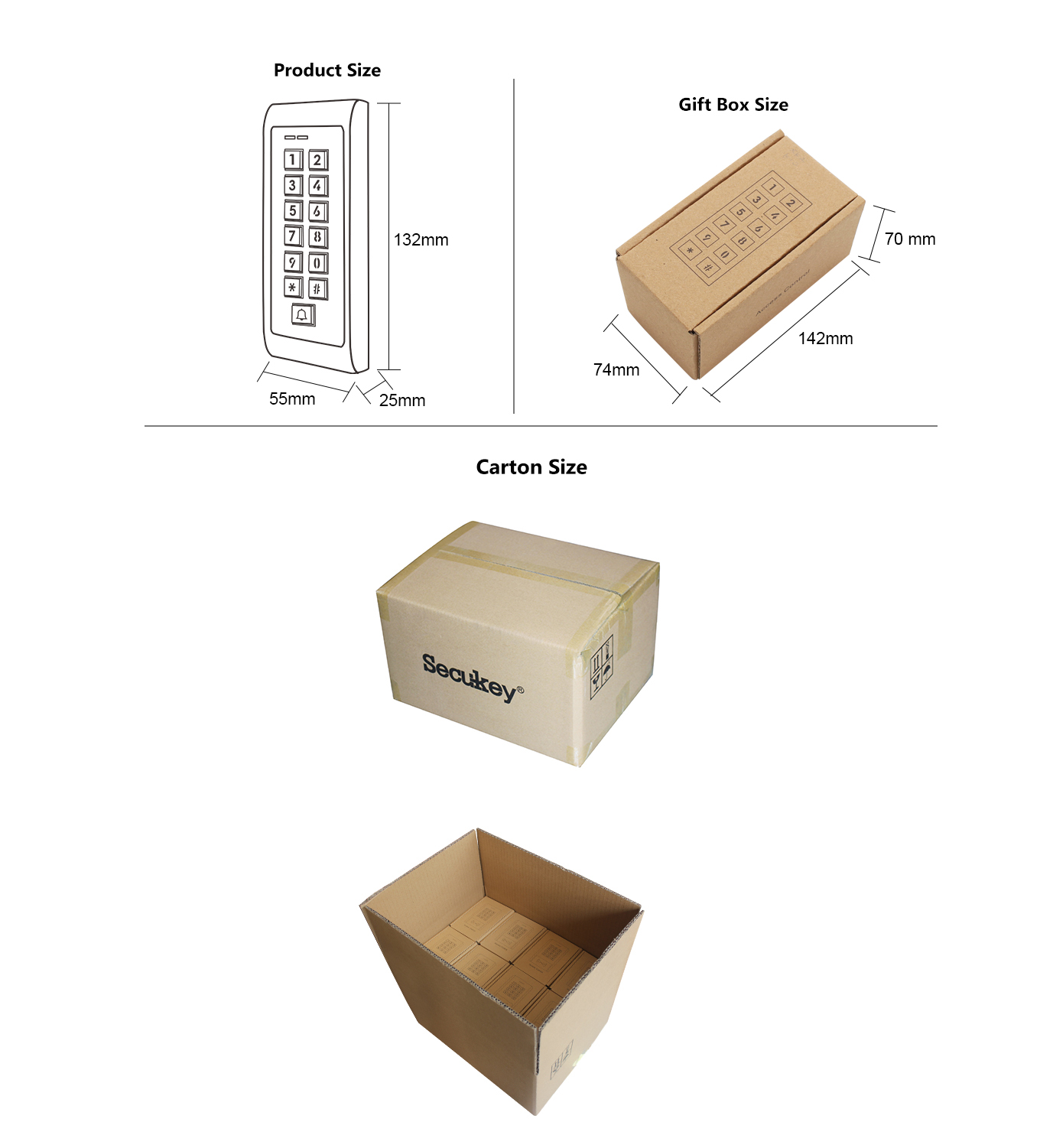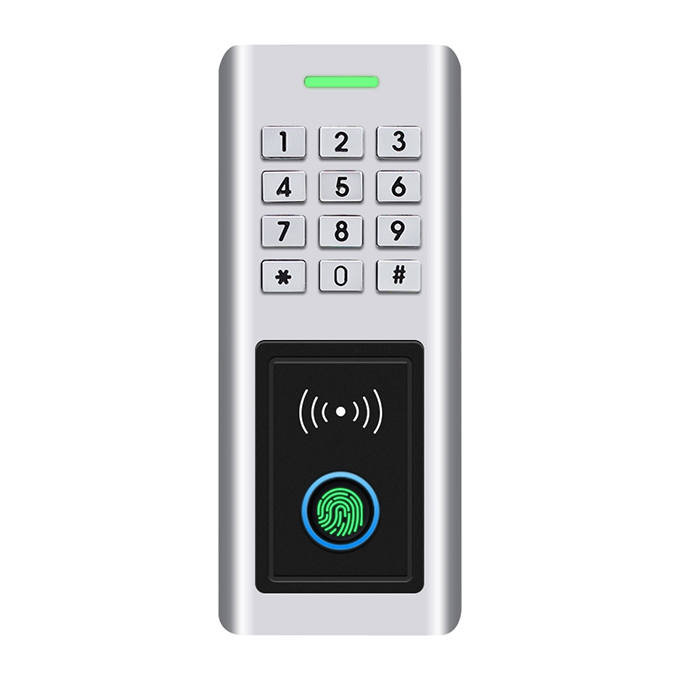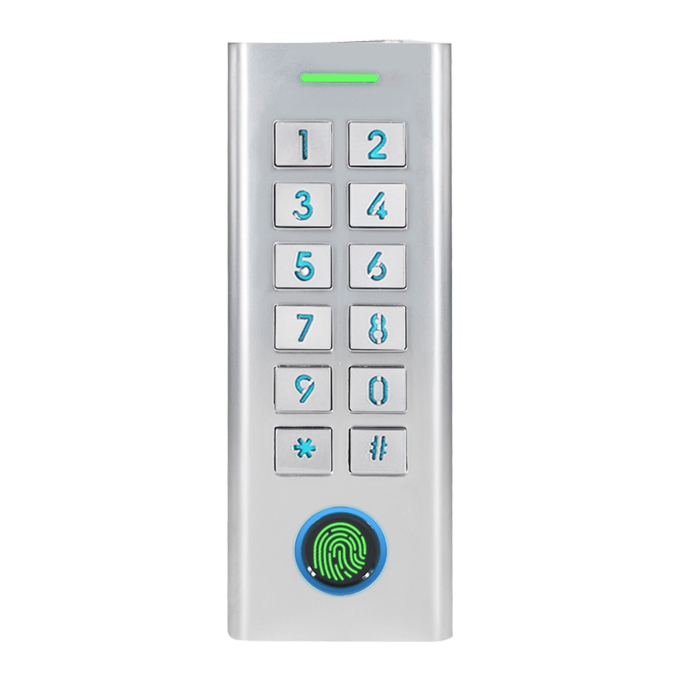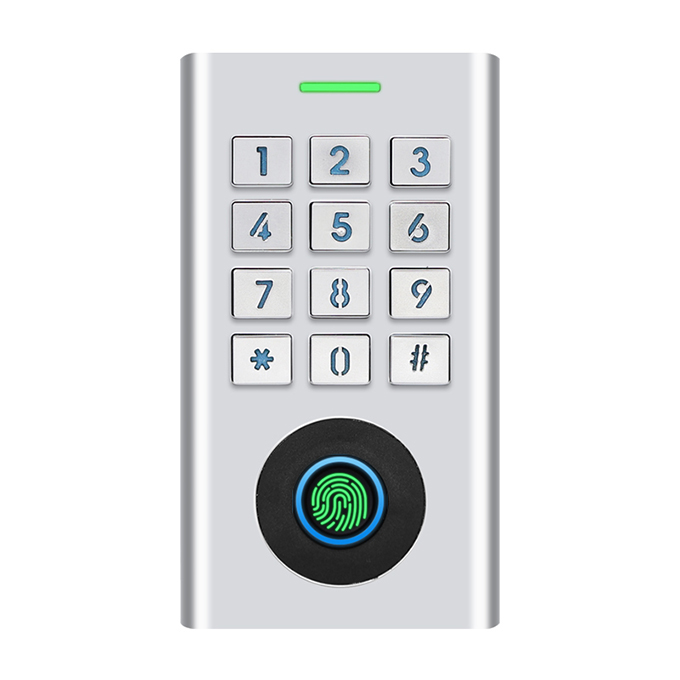


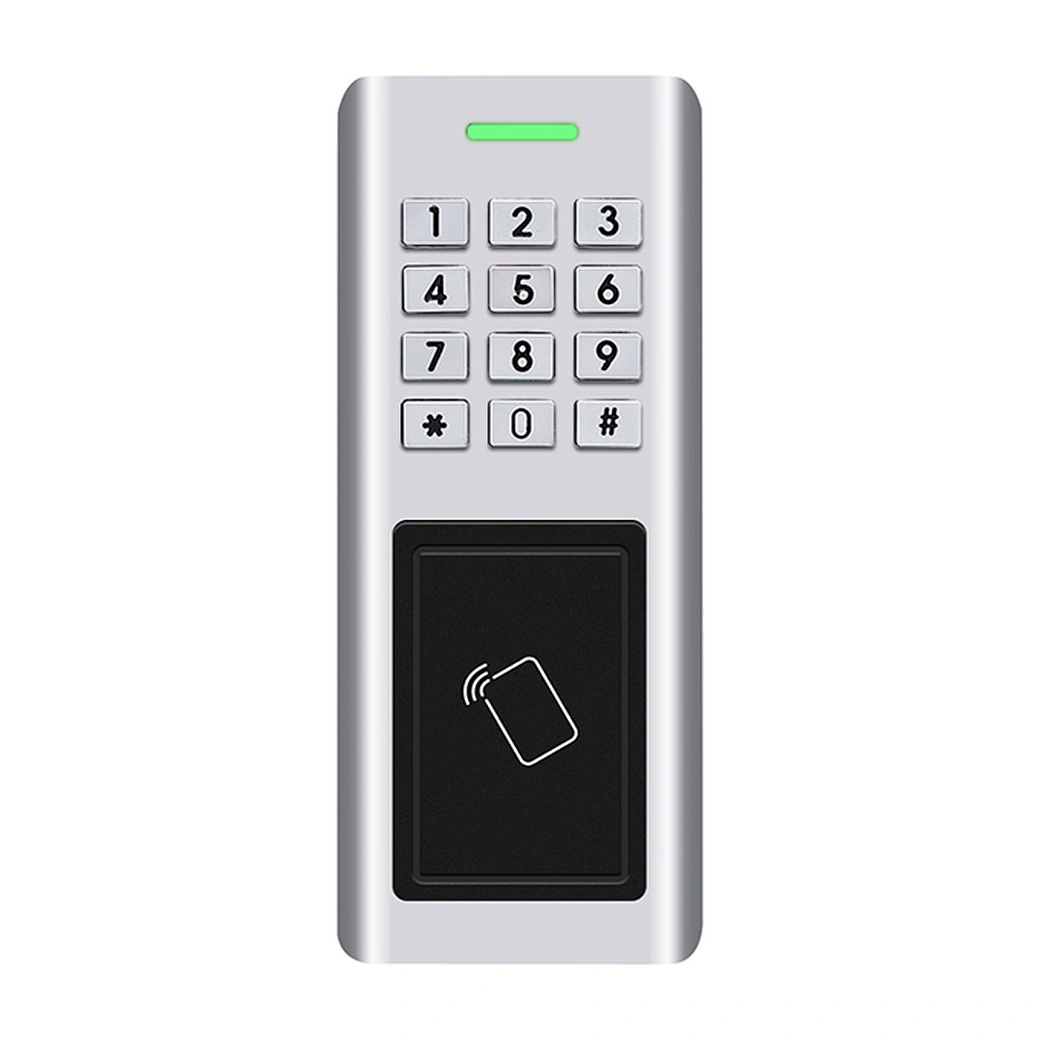
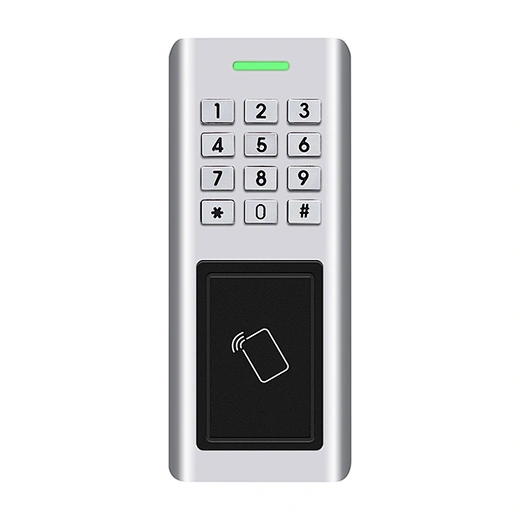


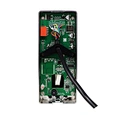
SK15-X
Outdoor Keypad & RFID Access
Metal case, anti-vandal
Waterproof, confomms to lP67
PIN length: 4-6 digits
EM+HID+Mifare cards EM card: Wiegand 26~44 bits input & output Mifare card: Wiegand 26-44bits,56bits, 58bits input & output
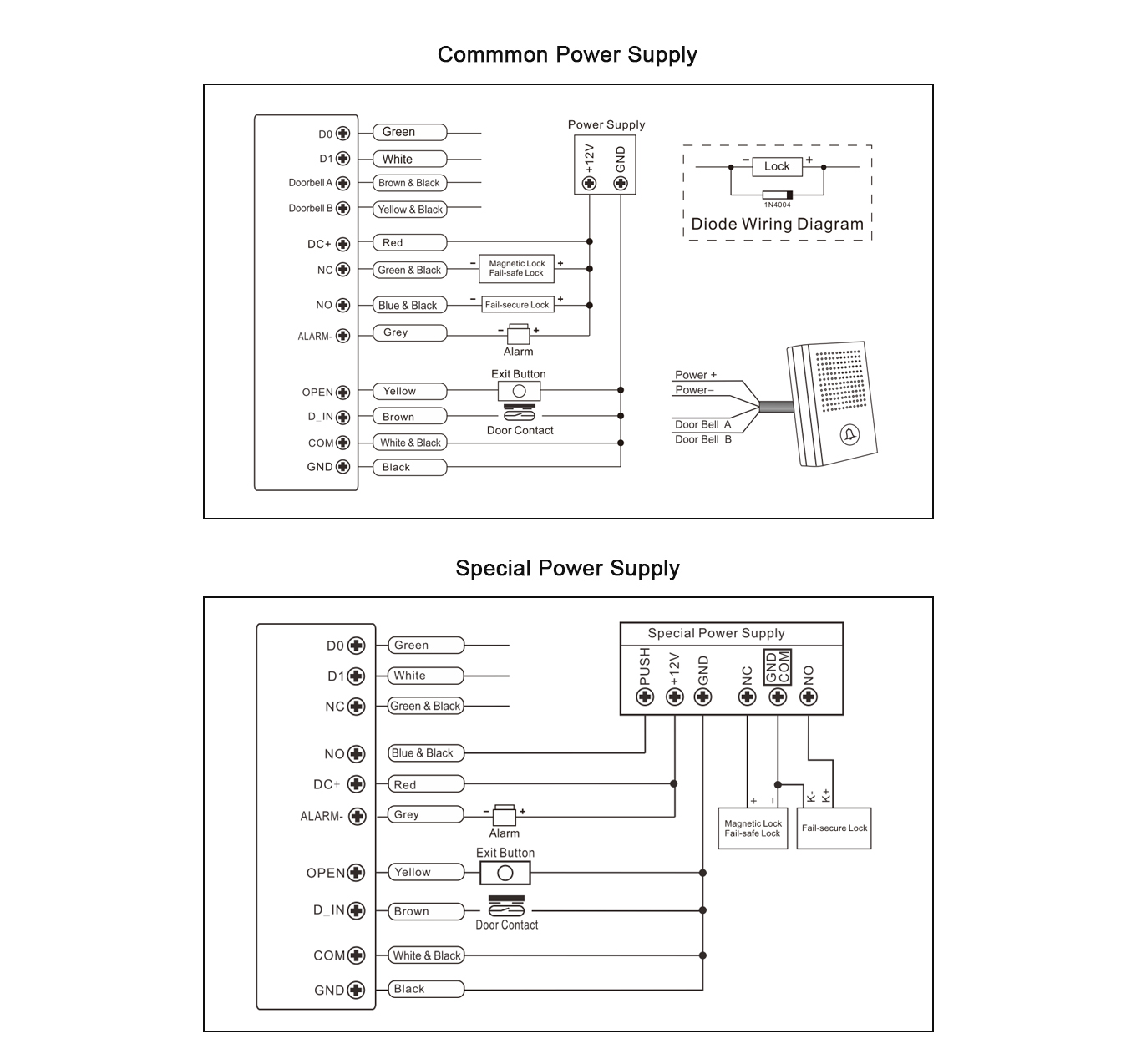
Can be used as Wiegand reader with LED & buzzer output
Card block enrollment
Tri-color LED status display
Integrated alarm & buzzer output
Pulse mode, Toggle mode
User data can be transferred (except fingerprint users)
2 devices can be interlocked for 2 doors
Built-in light dependent resistor (LDR) for anti tamper


Sales Inquiry
Description of Outdoor Keypad & RFID Access
SK15-X is a single door mutifunction standalone access controller or a Wiegand output reader. It uses Atmel MCU assuring stable performance.
The operation is very user-friendly, and low-power circuit makes it long service life.
The device can be made with WiFi version.
The operation is very user-friendly, and low-power circuit makes it long service life.
The device can be made with WiFi version.
Features of Outdoor Keypad & RFID Access
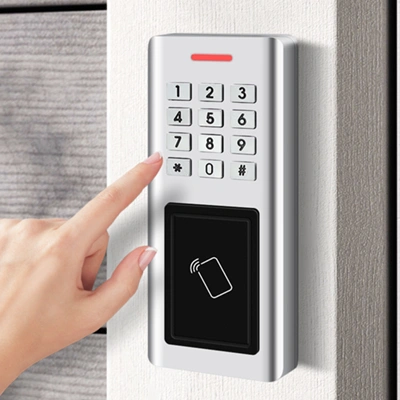
10,000 User Capacity
Access Method: Card, PIN
Access Method: Card, PIN
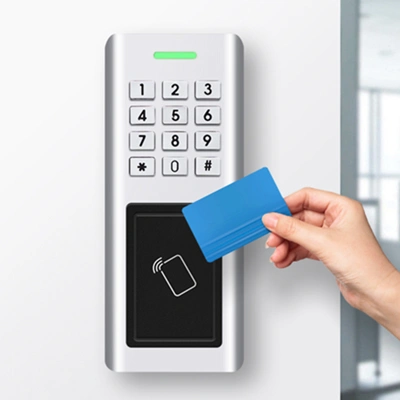
Triple-Card Compatibility
EM + HID + Mifare cards
EM + HID + Mifare cards
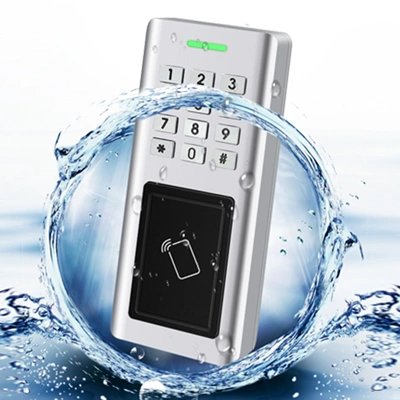
Waterproof, IP67
Convertible working modes, more possibilities
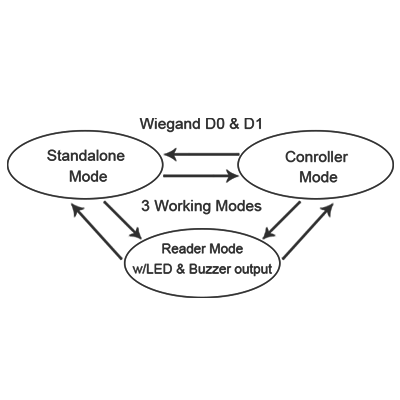
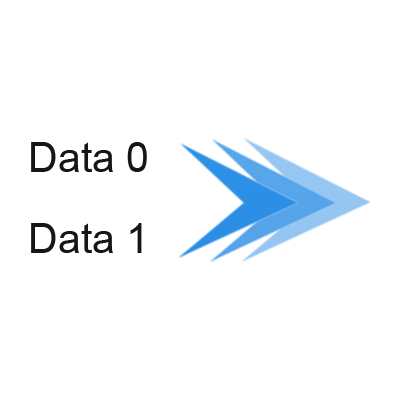
Wiegand 26~44bits,56bits,58 bits input & output
User data can be transferred by Wiegand line.
User data can be transferred by Wiegand line.
FAQ of Outdoor Keypad & RFID Access
1. What can the WiFi version do that the standard one cannot?
The standard SK15-X runs entirely on-device: all credentials are held locally and the door is released by the built-in relay or handed to a panel over Wiegand. The WiFi build is a factory option that adds a network link for remote supervision and configuration. Please confirm on the order which functions the WiFi link exposes, since that is a firmware matter.