


2026-10-30
Electronic vs. Electric Smart Door Locks: A Technical Guide
Electronic vs. Electric Smart Door Locks: Navigating the Technical Landscape
When sourcing smart locks for commercial, residential or hospitality projects, the terms electronic smart lock and electric smart lock are often used interchangeably. However, they may describe different products, power systems and installation requirements.
Understanding these differences helps distributors, system integrators and project buyers select the right lock, avoid compatibility problems and prepare accurate quotations.
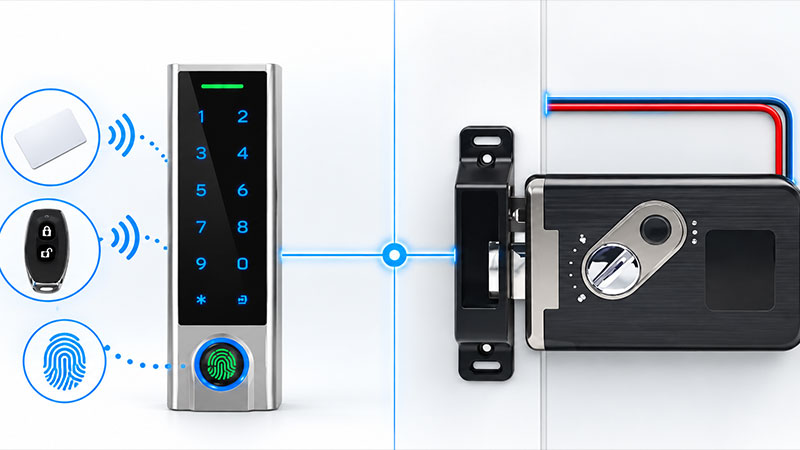
1. Clarifying Terminology for Professional Sourcing
An electronic smart door lock uses electronic credentials and control logic to verify users. Depending on the model, access methods may include:
Fingerprint
PIN code
RFID card
Bluetooth
WiFi
Mobile application
Temporary digital password
Many electronic smart locks are battery-powered and integrate the reader, controller and locking mechanism into one product. They are commonly used for apartments, hotels, offices and rental properties.
An electric smart door lock is a broader sourcing term. It may refer to a smart lock with an electrically driven motor or to a wired locking device such as:
Electric strike
Magnetic lock
Electric bolt
Motorized mortise lock
Electrified handle lock
In professional specifications, buyers should not rely on the product name alone. They should confirm the lock structure, power source, communication method, access credentials and door compatibility.
2. Power Requirements and Backup Solutions
Power design directly affects installation, reliability and maintenance.
Battery-powered electronic smart locks
Battery-operated locks are easier to install because no power cable needs to pass through the door. They are suitable for apartments, hotels and renovation projects.
Important considerations include:
Battery type and quantity
Estimated battery life
Low-battery warning
Standby power consumption
Emergency USB power
Mechanical key override
Battery life depends on access frequency, communication mode, motor resistance and environmental temperature. WiFi communication generally consumes more power than local RFID or Bluetooth operation.
Wired electric smart locks
Wired locks normally require a stable low-voltage power supply. They may also connect to an access controller, exit button, door sensor or fire-alarm system.
Before ordering, confirm:
Input voltage
Operating current
Peak starting current
Fail-safe or fail-secure operation
Power-supply capacity
Cable distance and voltage drop
For commercial projects, a backup battery or UPS can keep essential entrances operating during temporary power interruptions.
A reliable system should also provide an emergency opening method appropriate to the application and local safety requirements.
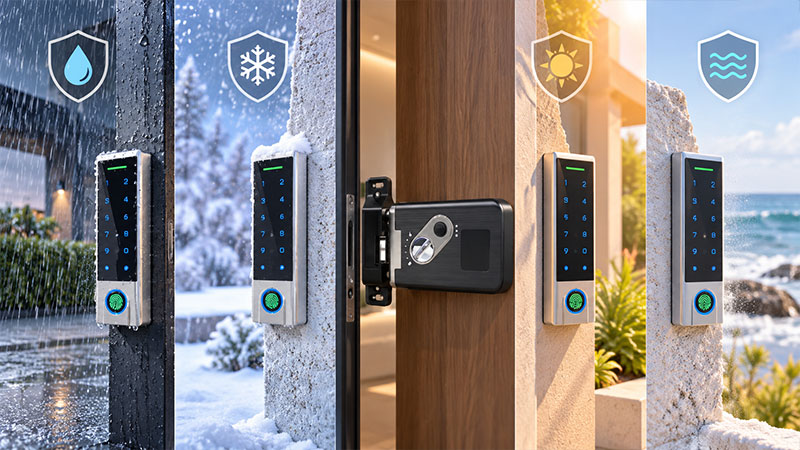
3. Durability in Extreme Weather
An outdoor electric smart lock must withstand more than occasional rain. Temperature changes, moisture, dust, direct sunlight and salt air can affect electronics, batteries and mechanical parts.
For exterior installations, buyers should evaluate:
IP waterproof and dustproof rating
Verified operating temperature
UV-resistant materials
Corrosion-resistant metal finishes
Sealed buttons and card-reading areas
Protected circuit boards
Drainage and condensation control
Low-temperature battery performance
Mechanical strength of the lock body
High temperature may accelerate battery aging, while extreme cold can reduce battery output and slow motor movement. Coastal installations may require additional corrosion protection because salt spray can damage untreated metal surfaces.
The door environment must also be considered. A weather-resistant lock installed on a warped door or misaligned mortise may still experience excessive motor load and unreliable locking.
For extreme-weather projects, request test data and confirm that the quoted temperature and waterproof ratings apply to the complete product—not only to its exterior housing.
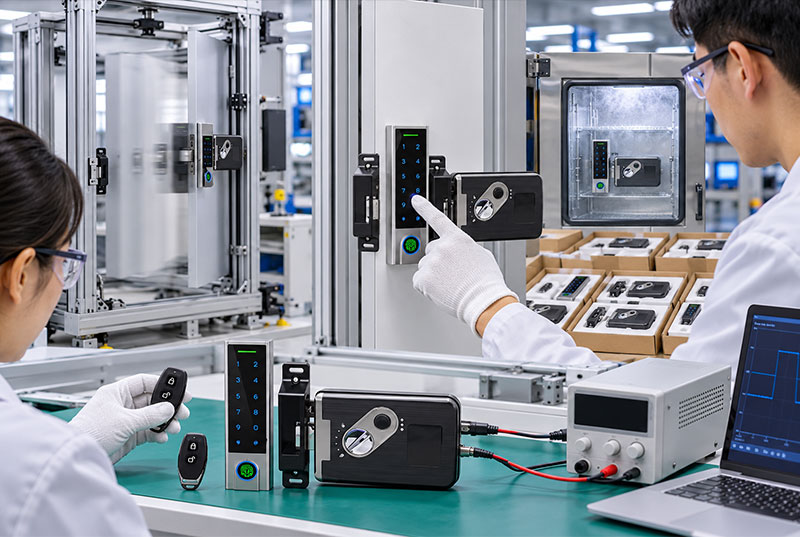
4. Secukey’s Engineering Approach
A reliable smart lock should combine access technology, mechanical design and practical installation requirements.
When developing an electronic smart lock or electric locking solution, key engineering priorities should include:
Stable credential recognition
Low power consumption
Reliable motor operation
Secure local and remote access
Emergency opening options
Consistent mechanical dimensions
Environmental protection
Clear installation documentation
Long-term component availability
For distributors and project customers, product customization is also important. OEM/ODM requirements may include branded housing, customized packaging, software language, card type, lock dimensions and integration with Tuya or TTLock ecosystems.
Before mass production, buyers should provide door thickness, opening direction, mortise dimensions, required access methods, installation environment and estimated order quantity. Sample testing on the actual project door is strongly recommended.
Choosing the Right Solution
Choose a battery-powered electronic smart door lock when simple installation, mobile access and integrated user management are priorities.
Choose a wired electric smart door lock or separate electric lock when the project requires centralized access control, continuous power, fire-alarm integration or management of multiple commercial entrances.
The best solution is determined by the door, power conditions, security level and management requirements—not simply by whether the product is described as “electronic” or “electric.”
Secukey provides smart locks, electric locking products and access control solutions for distributors, installers and commercial projects.
Send us your door specifications, required unlocking methods, installation environment and project quantity to receive a suitable product recommendation and OEM/ODM quotation.