

Infrared Touchless Buttons in Hospitals
Introduction of Infrared Touchless Buttons in Hospitals
Hospitals are environments where hygiene, efficiency, safety, and accessibility intersect every minute. Door control systems, often overlooked, play a critical role in infection control, workflow efficiency, and patient experience. Infrared (IR) touchless buttons—also called no‑touch exit buttons or wave‑to‑open sensors—have rapidly become a standard component in modern healthcare facilities.
This article analyzes the use of infrared buttons in hospitals from multiple perspectives: infection control, clinical workflow, patient accessibility, technical reliability, facility management, and long‑term cost effectiveness.

1. Infection Control and Hygiene
Reducing Cross‑Contamination
One of the primary drivers for adopting infrared buttons in hospitals is infection prevention. Traditional mechanical push buttons are high‑touch surfaces that can harbor bacteria and viruses. In high‑risk zones such as:
-
Operating rooms
-
Intensive care units
-
Isolation wards
-
Emergency departments
Reducing contact points is essential.
Infrared buttons allow staff and patients to open doors without physical contact, significantly lowering the risk of:
-
Hand‑to‑surface transmission
-
Cross‑contamination between rooms
-
Spread of hospital‑acquired infections (HAIs)
Supporting Sterile Environments
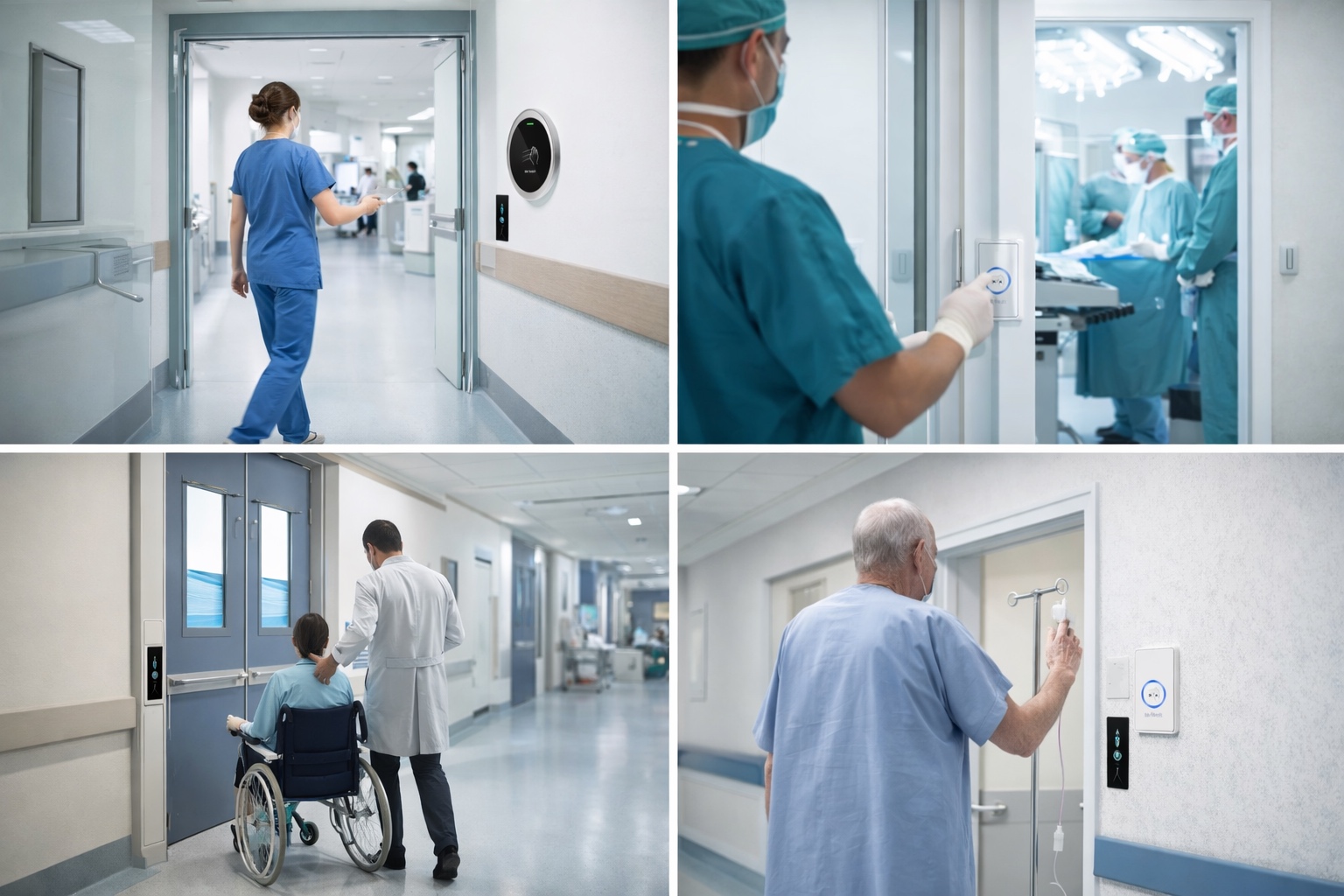
In operating theatres and clean rooms, maintaining sterility is critical. Surgeons and nurses wearing sterile gloves can activate doors without breaking sterile protocol, improving both safety and efficiency.
2. Clinical Workflow and Staff Efficiency
Hands‑Free Operation in Busy Environments
Hospital staff often carry:
-
Medical trays
-
Equipment
-
Medication carts
-
Patient records
Infrared buttons enable hands‑free door operation, which:
-
Saves time
-
Reduces physical strain
-
Minimizes interruptions in workflow
In emergency and surgical areas, even small time savings per door can accumulate into meaningful efficiency gains.
Improving Traffic Flow
Touchless activation allows smoother movement through:
-
Corridors
-
Operating suites
-
Diagnostic areas
This reduces bottlenecks and improves overall patient throughput.
3. Patient Accessibility and Inclusiveness
Supporting Patients with Limited Mobility
Infrared buttons are particularly beneficial for:
-
Wheelchair users
-
Elderly patients
-
Patients using walkers or IV poles
-
Post‑surgery patients with limited arm movement
The ability to activate doors with a simple hand wave improves independence and dignity.
Compliance with Accessibility Standards
Many hospital designs must comply with accessibility regulations (such as ADA or similar standards internationally). Touchless buttons:
-
Reduce required activation force
-
Can be installed at accessible heights
-
Support universal design principles
4. Safety and Operational Reliability
Fail‑Safe Door Control
Modern infrared buttons are designed to integrate with:
-
Electric locks
-
Magnetic locks
-
Access control systems
They typically support:
-
NO / NC / COM relay outputs
-
Fire alarm integration
-
Emergency override functions
This ensures that in case of:
-
Power failure
-
Fire alarm activation
-
System fault
Doors will unlock safely for evacuation.
Visual Feedback and User Confidence
Most infrared buttons include LED indicators (blue, green, or red) that provide:
-
Activation confirmation
-
Standby status
-
Fault indication
This reduces user hesitation and misuse.
5. Technical Considerations for Hospitals
Detection Stability
Hospitals require sensors that:
-
Are not triggered by random movement
-
Resist interference from lighting or reflections
-
Maintain consistent detection distance
High‑quality infrared buttons are calibrated to avoid:
-
False triggering from passing staff
-
Accidental activation by carts or curtains
Waterproof and Durable Design
In healthcare settings, devices must withstand:
-
Frequent cleaning with disinfectants
-
Moisture and humidity
-
Continuous daily use
Waterproof metal or medical‑grade plastic housings extend service life and maintain appearance.
6. Facility Management Perspective
Easy Installation and Standard Wiring
Infrared buttons are typically:
-
12–24V DC powered
-
Compatible with standard access control wiring
-
Easy to replace or upgrade
This simplifies both initial installation and future maintenance.
Reduced Maintenance Costs
Compared to mechanical push buttons, touchless buttons:
-
Have no moving parts
-
Suffer less mechanical wear
-
Require fewer replacements
This lowers:
-
Maintenance labor
-
Spare part inventory
-
Downtime for door systems
7. Economic and Long‑Term Value
Balancing Initial Cost and Lifecycle Savings
While infrared buttons may have a slightly higher initial cost than mechanical buttons, they deliver value through:
-
Longer lifespan
-
Lower infection‑related costs
-
Reduced maintenance
-
Improved staff productivity
In large hospitals with hundreds of doors, the return on investment becomes significant over time.
Supporting Modern Hospital Branding
Touchless technology also contributes to:
-
A modern, high‑tech image
-
Patient confidence in hygiene standards
-
Differentiation for private hospitals and medical centers
8. Typical Application Areas in Hospitals
Infrared buttons are widely used in:
-
Operating room entrances
-
ICU and CCU doors
-
Isolation rooms
-
Clean corridors
-
Pharmacy and laboratory access
-
Public washrooms and wards
Each area benefits differently, but all share the goals of hygiene, safety, and efficiency.
Conclusion
Infrared touchless buttons are no longer a luxury feature in hospitals—they are an essential component of modern healthcare infrastructure.
From infection control and staff efficiency to patient accessibility and long‑term cost savings, their value spans multiple disciplines:
-
Clinicians gain faster, safer workflows
-
Patients gain dignity and independence
-
Facility managers gain reliability and lower maintenance
-
Hospitals gain stronger hygiene control and modern branding
As hospitals continue to prioritize safety, efficiency, and patient‑centered design, infrared buttons will remain a key technology supporting smarter, cleaner, and more humane healthcare environments.